
Assorted rogues - Person Sheet
Assorted rogues - Person Sheet


Spouses
Birth21 Apr 1610, Vitré18
TitleSeigneur de Landauran
FatherDavid (ii) Collot D’Escury (ca1548-1611)
MotherMarie le Noir (1583-1666)
Marriage164018
Notes for Marguerite de la Primaudaye
Seems she had 8 children in 8 years, and then died. No bloody wonder. Poor woman.
Lart18 gives details of a few other Primaudayes, but the relationship to Marguerite is not clear. Possibly she was the sister of Gabriel de la Primaudaye, granddaughter of Nicolas de la Primaudaye, conseiller and secretaire du Roy, in 1540.
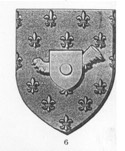
Arms: Semé de France, à l’écu d’or en abîme, chargé d’un tourteau de sable traversé d’une patte de griffon d’or. These are different from the arms given by [SF]306, which are probably more reliable as the pictures are also given in the Collot D’Escury portrait, i.e., France ancient, in bend sinister a lion’s gamb couped or armed gules, over all an inescutcheon or. [Seems like SF forgot about the tourteau de sable which appears in the picture but not the blazon].
Lart18 gives details of a few other Primaudayes, but the relationship to Marguerite is not clear. Possibly she was the sister of Gabriel de la Primaudaye, granddaughter of Nicolas de la Primaudaye, conseiller and secretaire du Roy, in 1540.
Arms: Semé de France, à l’écu d’or en abîme, chargé d’un tourteau de sable traversé d’une patte de griffon d’or. These are different from the arms given by [SF]306, which are probably more reliable as the pictures are also given in the Collot D’Escury portrait, i.e., France ancient, in bend sinister a lion’s gamb couped or armed gules, over all an inescutcheon or. [Seems like SF forgot about the tourteau de sable which appears in the picture but not the blazon].
Notes for André (Spouse 1)
We know quite a lot about him from [BHSP]308. In my translation, which comes with no guarantees:
“But for my father, God delivered him from such misfortune, although for two years after the death of his father he was at the mercy of his unloving mother and stepfather. As his temperament was strong, even a little violent, full of honour, courage and heart, be began to resist the abuse of his stepfather, and would never rest until he was free of it [?]. This is why he consented easily to my father's proposition, to equip him and send him out to seek his fortune with Monsieur le Marquis d'Antrague, whom he remembered as a very good friend of his father.
My father left his stepfather at the age of 12, to go and find Monsieur d'Antrague, who lived in the Cévennes, two hundred leagues from Vitré; he arrived there safely, and Monsieur d'Antrague received him with all the affection and tenderness of a father, bringing him up for the next two years with his own children. Monsieur d'Antrague was the governor of Barnègues; he gave my father a position as ensign [?], but the wars of religion arrived. Louis XIII took Barnègues and disbanded the troops. My father then went to Holland where he was for two years in a regiment at Utrecht. Upon his return to France, Monsieur le duc de la Tremouilla raised a company of soldiers and gave the command to my father, but this company did not last long, as the court forced Monsieur le duc to dismiss them. Since my father found himself without a job, he went to Mademoiselle Rohan to ask of her a letter of recommendation to her brother, Henry de Rohan, who was the commander in the Valteline; having obtained one he went there.
He was received very favourably by Monsieur de Rohan, and was made a gentleman of his chamber and a cornet in his guards. After the disgrace of Monsieur de Rohan my father took service with the duc de Birkenfeld, who made him an cornet. However, the king of France having no more need of these troops, my father found himself again without employment. Monsieur de Turenne gave him a position as lieutenant in Streefs. My father went on campaign and was badly wounded, with a broken arm. He was taken to Metz, where he thought he was going to have to have it amputated, but it healed. He went on a second campaign, without having his own company. As he had the misfortune to be wounded in every situation in which he found himself, he received at Lamort (?) a musket ball that crushed his whole nose and that he thought was going to kill him, but which procured him his own naval company in 1639. He commanded a number of companies after that.
As recompense, the King made him a gentleman in 1653, as we know from a patent that I have in my possession. In July, 1640, my father married my dear mother Mademoiselle de La Primaudois, with whom he had eight children, four boys and four girls. Two of the boys died when children. I was the third. All the daughters are still alive, except one who died at the home of my daughter in Ireland. The fourth son was killed, a lieutenant in the Auvergne, at the battle of Senef; he was the seigneur de Landaurant.
In 1649 my very dear mother died, when I was about 6. At this time, my father neglected to register the letters patent that confirmed his nobility, that he had received from the king, because he had left for the army. He was thus obliged, in 1655, to have them redone, and in 1656, he registered them again at the chambers of the comtes de Bretagne. However, they could not be verified, and were not believed, which caused him great trouble and possible great harm to all of us. In 1659, the king established a committee, at Rennes, to examine nobility; my father was assigned there, together with others whose letters of nobility were useless, as they had not been verified; so to establish his title he had to seach in Picardy, from where our ancestors originally came. While my father was occupied with this research, he was condemned just because he was a Huguenot, without having been [?]. Without examining any of his documents the committee threw him out, which obliged my father to present his request to the king, who, by his letters patent of 1675, rescued us from the injustice of the Brittany committee.
The king loved best to help those arrested [?], so it was necessary to go through him, but we could still show [?] an ancient and noble lineage, as we had found titles of more than 400 years old. My father produced these to the consul, but they were not sufficient to free him from his unjust detention, to get out of which he had to rely on the letters patent which were verified by the king in 1675. As for all the documents and evidence, they are in the possession of my cousin, the son of Philippe, who bore the name of Collot until 1685; but having become seigneur of Landaurant,
[ I don't understand this next few lines. Looks to be something about his cousin and the titles and evidences of nobility...]
On top of all this, the cruel persecution occured, in 1685, that made my father and I leave our native country, without having been able to return to Monsieur de Landaurent the titles and evidence of our birth, or the acts and letters of the king that I had been able to save by a miracle. My father left France in 1686, aged 76. Monsieur le prince d'Orange gave him a captain's pension, which he didn't enjoy for long, as he died the same year he left France, at Niem\`egue, where I had gone with my family upon leaving France.”
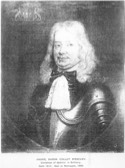
In this picture, which comes from [SF]306, we see the correct Collot D’Escury arms, which are different from the ones given by Lart. They are: Azure, a fess argent, charged with a mullet, sable. They are combined, it seems, with the Primaudaye arms, although the picture is difficult to make out. I have not yet seen a high-quality version of the original.
[SF]306 gives the French original of the letters patent that granted nobility to Andre. In these he was called, variously, André Collot Escuier Sieur de Curie & de Laudaran, André de Collot Escuyer Sieur D’Escury et de L’Audaran, or André Collot Escuyer Sieur d’Escury & de Laudarran.
“But for my father, God delivered him from such misfortune, although for two years after the death of his father he was at the mercy of his unloving mother and stepfather. As his temperament was strong, even a little violent, full of honour, courage and heart, be began to resist the abuse of his stepfather, and would never rest until he was free of it [?]. This is why he consented easily to my father's proposition, to equip him and send him out to seek his fortune with Monsieur le Marquis d'Antrague, whom he remembered as a very good friend of his father.
My father left his stepfather at the age of 12, to go and find Monsieur d'Antrague, who lived in the Cévennes, two hundred leagues from Vitré; he arrived there safely, and Monsieur d'Antrague received him with all the affection and tenderness of a father, bringing him up for the next two years with his own children. Monsieur d'Antrague was the governor of Barnègues; he gave my father a position as ensign [?], but the wars of religion arrived. Louis XIII took Barnègues and disbanded the troops. My father then went to Holland where he was for two years in a regiment at Utrecht. Upon his return to France, Monsieur le duc de la Tremouilla raised a company of soldiers and gave the command to my father, but this company did not last long, as the court forced Monsieur le duc to dismiss them. Since my father found himself without a job, he went to Mademoiselle Rohan to ask of her a letter of recommendation to her brother, Henry de Rohan, who was the commander in the Valteline; having obtained one he went there.
He was received very favourably by Monsieur de Rohan, and was made a gentleman of his chamber and a cornet in his guards. After the disgrace of Monsieur de Rohan my father took service with the duc de Birkenfeld, who made him an cornet. However, the king of France having no more need of these troops, my father found himself again without employment. Monsieur de Turenne gave him a position as lieutenant in Streefs. My father went on campaign and was badly wounded, with a broken arm. He was taken to Metz, where he thought he was going to have to have it amputated, but it healed. He went on a second campaign, without having his own company. As he had the misfortune to be wounded in every situation in which he found himself, he received at Lamort (?) a musket ball that crushed his whole nose and that he thought was going to kill him, but which procured him his own naval company in 1639. He commanded a number of companies after that.
As recompense, the King made him a gentleman in 1653, as we know from a patent that I have in my possession. In July, 1640, my father married my dear mother Mademoiselle de La Primaudois, with whom he had eight children, four boys and four girls. Two of the boys died when children. I was the third. All the daughters are still alive, except one who died at the home of my daughter in Ireland. The fourth son was killed, a lieutenant in the Auvergne, at the battle of Senef; he was the seigneur de Landaurant.
In 1649 my very dear mother died, when I was about 6. At this time, my father neglected to register the letters patent that confirmed his nobility, that he had received from the king, because he had left for the army. He was thus obliged, in 1655, to have them redone, and in 1656, he registered them again at the chambers of the comtes de Bretagne. However, they could not be verified, and were not believed, which caused him great trouble and possible great harm to all of us. In 1659, the king established a committee, at Rennes, to examine nobility; my father was assigned there, together with others whose letters of nobility were useless, as they had not been verified; so to establish his title he had to seach in Picardy, from where our ancestors originally came. While my father was occupied with this research, he was condemned just because he was a Huguenot, without having been [?]. Without examining any of his documents the committee threw him out, which obliged my father to present his request to the king, who, by his letters patent of 1675, rescued us from the injustice of the Brittany committee.
The king loved best to help those arrested [?], so it was necessary to go through him, but we could still show [?] an ancient and noble lineage, as we had found titles of more than 400 years old. My father produced these to the consul, but they were not sufficient to free him from his unjust detention, to get out of which he had to rely on the letters patent which were verified by the king in 1675. As for all the documents and evidence, they are in the possession of my cousin, the son of Philippe, who bore the name of Collot until 1685; but having become seigneur of Landaurant,
[ I don't understand this next few lines. Looks to be something about his cousin and the titles and evidences of nobility...]
On top of all this, the cruel persecution occured, in 1685, that made my father and I leave our native country, without having been able to return to Monsieur de Landaurent the titles and evidence of our birth, or the acts and letters of the king that I had been able to save by a miracle. My father left France in 1686, aged 76. Monsieur le prince d'Orange gave him a captain's pension, which he didn't enjoy for long, as he died the same year he left France, at Niem\`egue, where I had gone with my family upon leaving France.”
In this picture, which comes from [SF]306, we see the correct Collot D’Escury arms, which are different from the ones given by Lart. They are: Azure, a fess argent, charged with a mullet, sable. They are combined, it seems, with the Primaudaye arms, although the picture is difficult to make out. I have not yet seen a high-quality version of the original.
[SF]306 gives the French original of the letters patent that granted nobility to Andre. In these he was called, variously, André Collot Escuier Sieur de Curie & de Laudaran, André de Collot Escuyer Sieur D’Escury et de L’Audaran, or André Collot Escuyer Sieur d’Escury & de Laudarran.